

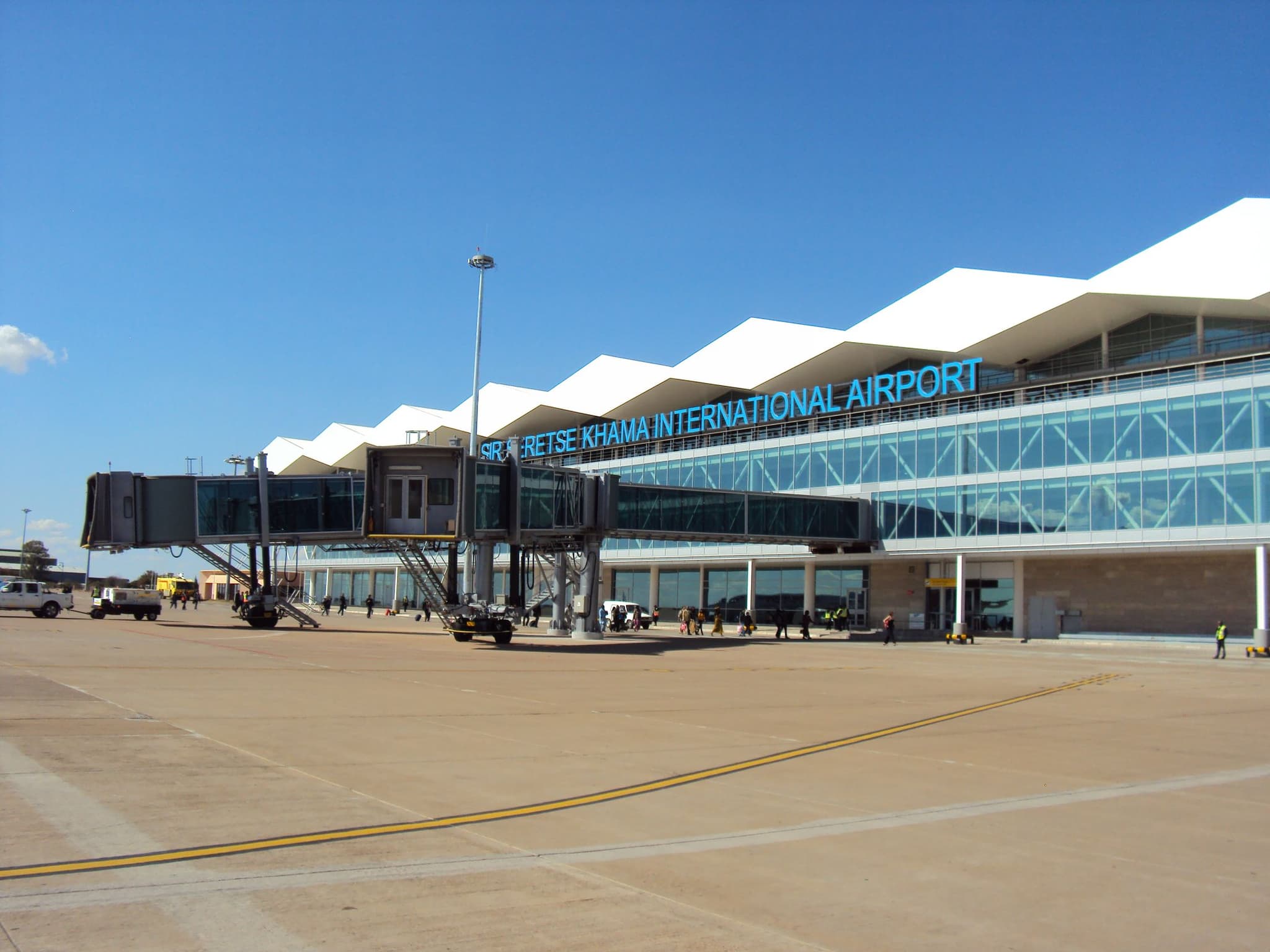

Specialist and rare care, built for the whole region — ninety minutes from home.
A 130-bed hospital at the Gaborone airport economic zone, holding the full range of care a major hospital provides and, above it, the complex and rare work that today puts families on long-haul flights — cancer, the heart, the brain, high-risk pregnancy, and intensive care for newborns and children.

Orange Botswana has signed a memorandum of understanding with TEMCO, becoming the preferred connectivity provider to the hospital development ecosystem at the Gaborone Airport Special Economic Zone, and the project's first corporate partner.
Read the announcement

The Orange Botswana and TEMCO teams at Orange head office in Gaborone, 28 September 2026, on the signing of the memorandum. TEMCO Chairman Sailas Temwa and Orange Botswana CEO Nene Maiga shake hands at the centre.
Orange Botswana is the first corporate partner on a National Development Plan 12 project, licensed by the Special Economic Zones Authority. What follows is being built at the same scale: institutional capital into the zone, and corporate partners with national and regional reach.
Two tiers, one building
Everything a major hospital does, and the tier above it
And above it, the work that today means a flight
- Two-linac radiation oncology
- Structural-heart intervention
- Complex electrophysiology
- First robotic surgical platform in Botswana
- Complex & neuro-oncology neurosurgery
- PET/CT & nuclear medicine
- Advanced IVF & embryology
- Dialysis at scale
The full range, under one roof
Emergency and theatre, imaging and pathology, maternity and newborn care, intensive care, cancer, cardiac and renal (kidney) medicine.




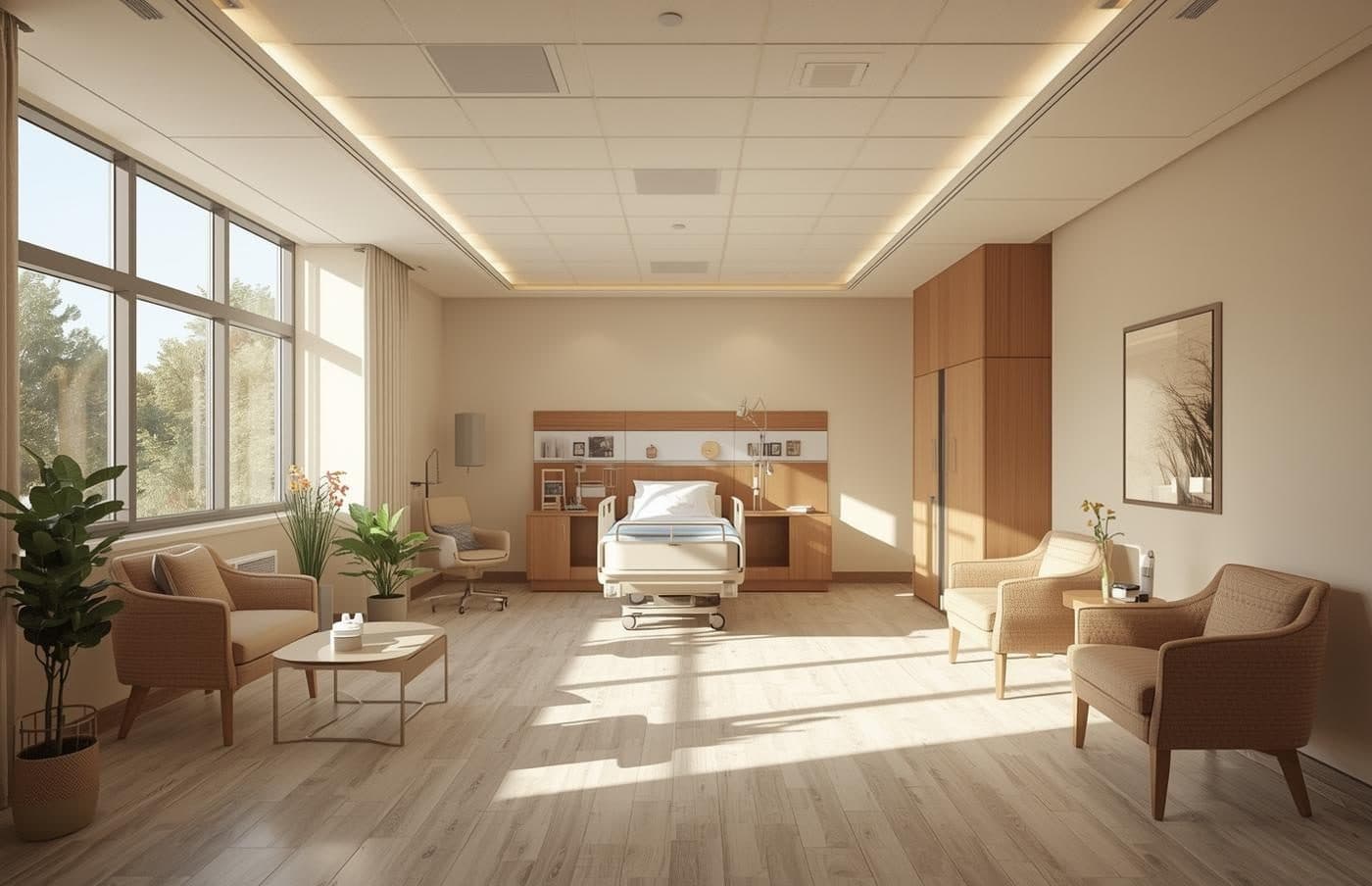
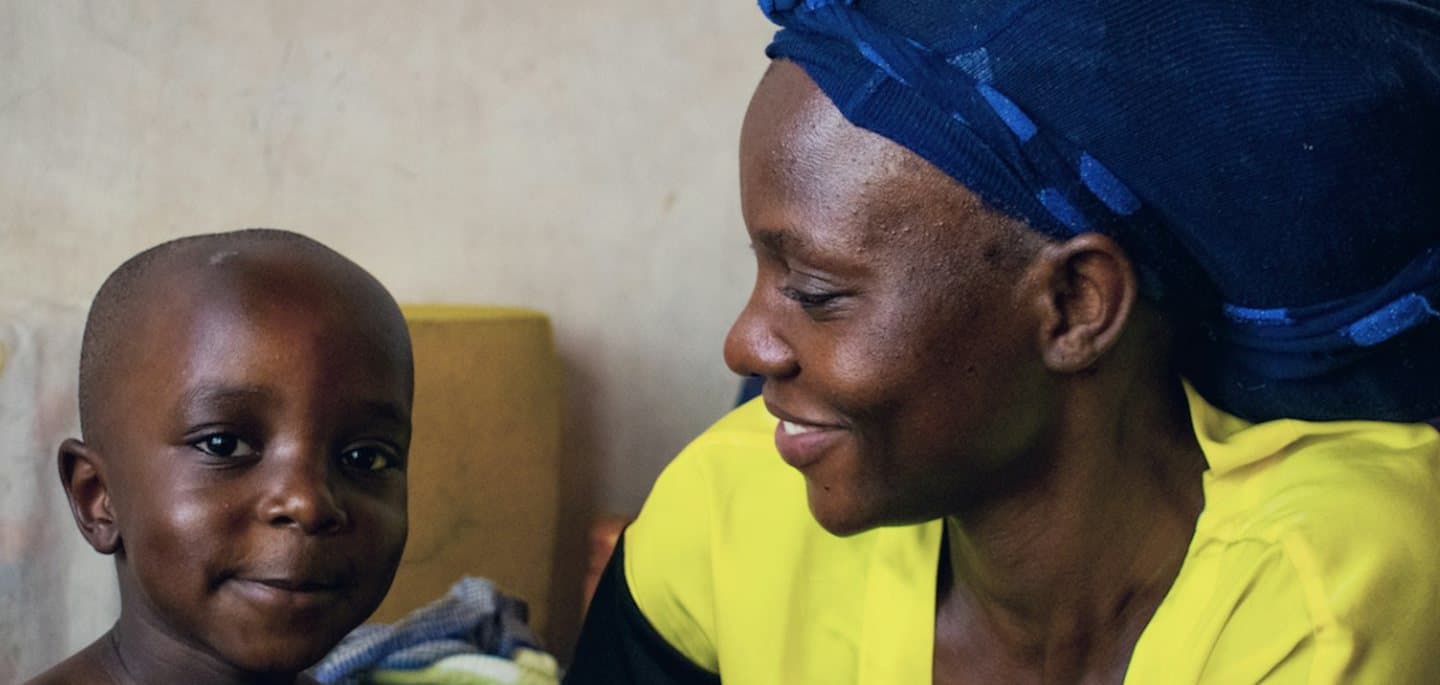
The pregnancy that turns dangerous is ninety minutes from a hospital built to hold it.
Women and children
Built around mothers and children
The cases that cost a family most are the ones that involve a mother or a child, and they are the ones most likely to mean a flight. Maternity and high-risk pregnancy care (obstetrics), neonatal and paediatric intensive care for newborn babies and children, and IVF and fertility care for women and for men sit on one campus, with the theatre and the intensive care in the same building as the ward.

A child who needs intensive care is treated here, and the family stays at the bedside.

The ninety-minute region
Most of the region is a short flight away
Sir Seretse Khama International is the hospital's front door, and the routes already run. A patient in Lusaka or Harare boards a flight of about ninety minutes, where the same case treated outside the continent costs most of a day in the air.
Scheduled direct routes into Sir Seretse Khama International Airport. Country outlines and city positions are drawn to scale.
Priced for the region
The same procedure, at a regional price
Specialist treatment at TEMCO is planned at 25 to 35 per cent below South-African private rates, and the standard behind it does not move with the price. A patient from Lusaka pays less for the procedure and less again for the trip, because the flight is ninety minutes instead of a day.
South-African private rate
TEMCO, planned
Every price is held to the same accredited-pathway standard. Proportions are indicative of the planned position at opening in 2029.
Named among Botswana's priority projects
As reported by Daily News · 20 November 2025
“…various projects including TEMCO Hospital … had attracted strong investor interest.”
TEMCO Specialised General Hospital is named among the priority projects of Botswana's Economic Transformation Programme (BETP) in national and government reporting. It is being built as a regional hospital, drawing patients from across southern Africa to Gaborone for specialist care.
Excerpts are reproduced briefly with attribution for reporting; full articles are available at the linked sources.
Partners and Endorsements
TEMCO is a priority project under National Development Plan 12, Botswana's plan for the years 2025 to 2030 and its route to high-income status by 2036, in which healthcare is one of the named sectors carrying that shift. It is an Entry Point Project of the Botswana Economic Transformation Programme, which sits under the Ministry of Finance, a portfolio held by the Vice President. TEMCO is a licensed company inside the Special Economic Zone: the Special Economic Zones Authority wrote in support of the project in December 2025 and the licence followed at board level in August 2026. The zone carries no customs duty on qualifying medical equipment, free repatriation of profits and no export mandate. Botswana itself is rated Baa1 by Moody's and BBB− by S&P, both with a negative outlook, with a convertible pula and no history of expropriation.
NDP 12 Priority
National Development Plan 12 · 2025–2030
BETP Entry Point Project
Botswana Economic Transformation Programme
BETP Secretariat
Delivery-Readiness Validation
SEZ Licensed
Special Economic Zones Authority
Ministry of Health
Letter of Support
How 2029 gets built
The hospital opens in the second quarter of 2029. What sits between now and then is a construction programme with the ground broken at the end of 2026, two years of building and fit-out after it, and a quarter set aside for commissioning before a single patient is admitted.
Each bar is drawn across the quarters its phase occupies, so the width of a bar is the time it takes. Select a phase to read what happens in it.
Phase 01 of 05
2026PlannedCapital Raise and Design
Investor engagement, final architectural design, equipment specification and procurement planning.
Phase 02 of 05
Q4 2026PlannedConstruction Commences
Site preparation, foundation works and structural construction at the SSKIA SEZ precinct.
Phase 03 of 05
2027–2028PlannedBuild and Fit-Out
Structural completion, MEP installation, interior fit-out and the commissioning of medical equipment, including the maternity, neonatal and paediatric intensive care suites, for mothers, newborn babies and children.
Phase 04 of 05
Q1 2029PlannedCommissioning
Equipment testing, clinical-team onboarding, activation of clinical protocols and a readiness assessment along the JCI accreditation pathway — the groundwork that lets the doors open to a defined standard.
Phase 05 of 05
Q2 2029PlannedOperations Commence
Initial operations at 35% occupancy, ramping to full capacity over the first three years.
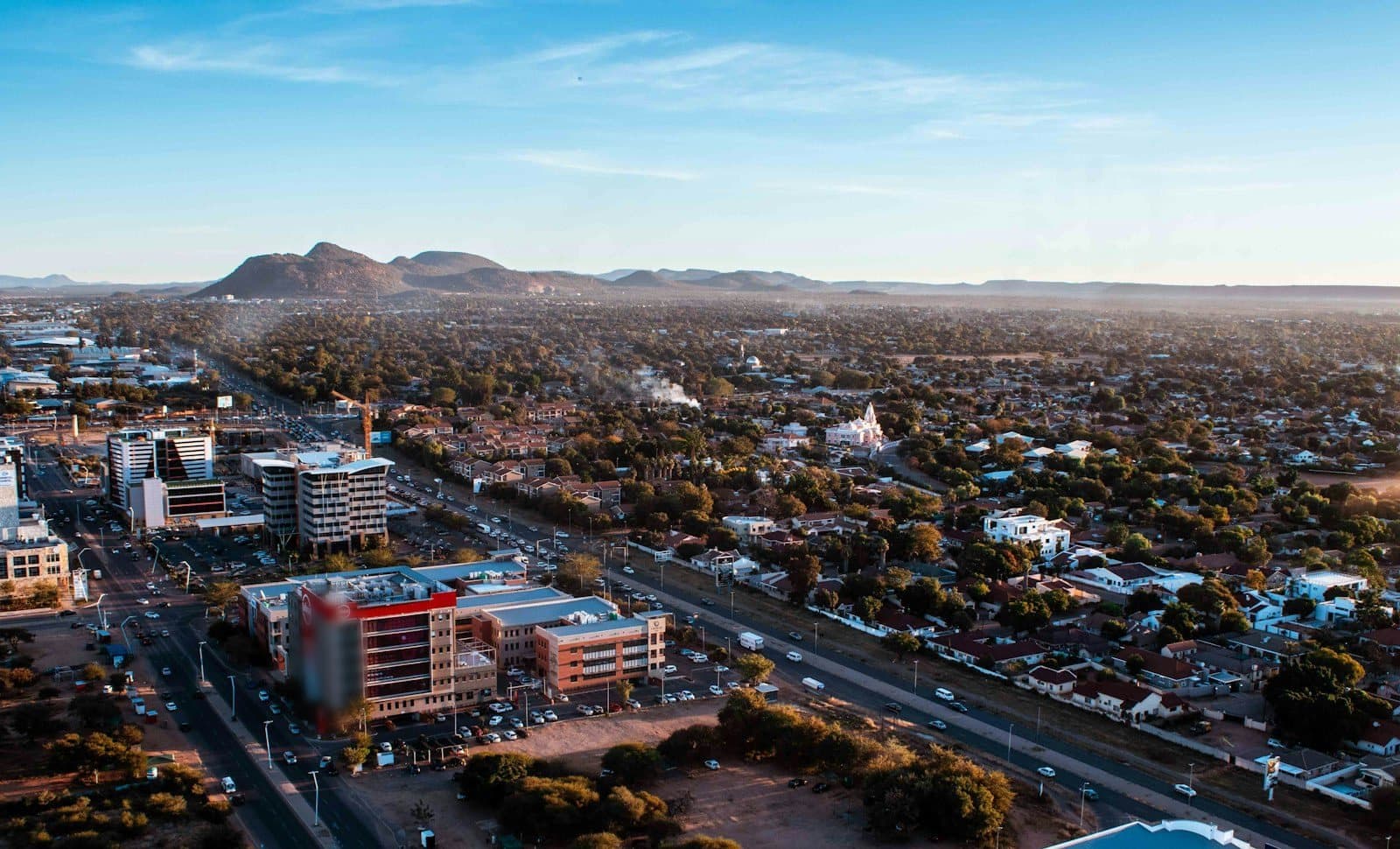
Healthcare as something Botswana sells to the region.
Projected 10-Year Impact
A national economic asset as much as a hospital: foreign earnings, a training pipeline that keeps specialists in the country, and better outcomes across Botswana and the wider region. Around 300 construction jobs lead into hundreds of permanent clinical and operational roles, with more than 200 specialists trained and recruited over the decade.
BWP 2.74bn
GDP Contribution
Cumulative across the first decade
2,300+
Direct & Indirect Jobs
Over the first decade
740
Permanent Roles
At full operation
BWP 422m
Tax to the State
Cumulative across the first decade
Raising the standard
New capacity, a JCI-pathway discipline and a specialist-training pipeline lift the whole sector. Doctors who would have built their careers abroad get a reason to build them here, and the people they train go on to work across Botswana's health system, public and private alike.
Invest in Botswana's Healthcare Future
A 130-bed hospital at the airport Special Economic Zone in Gaborone, built to draw specialist referrals from across southern Africa and to keep Botswana's own complex cases at home. Care sold across the border earns foreign currency, the zone carries no customs duty on qualifying medical equipment and no export mandate, and the capital structure is open to proposal. The detail is in the data room.