

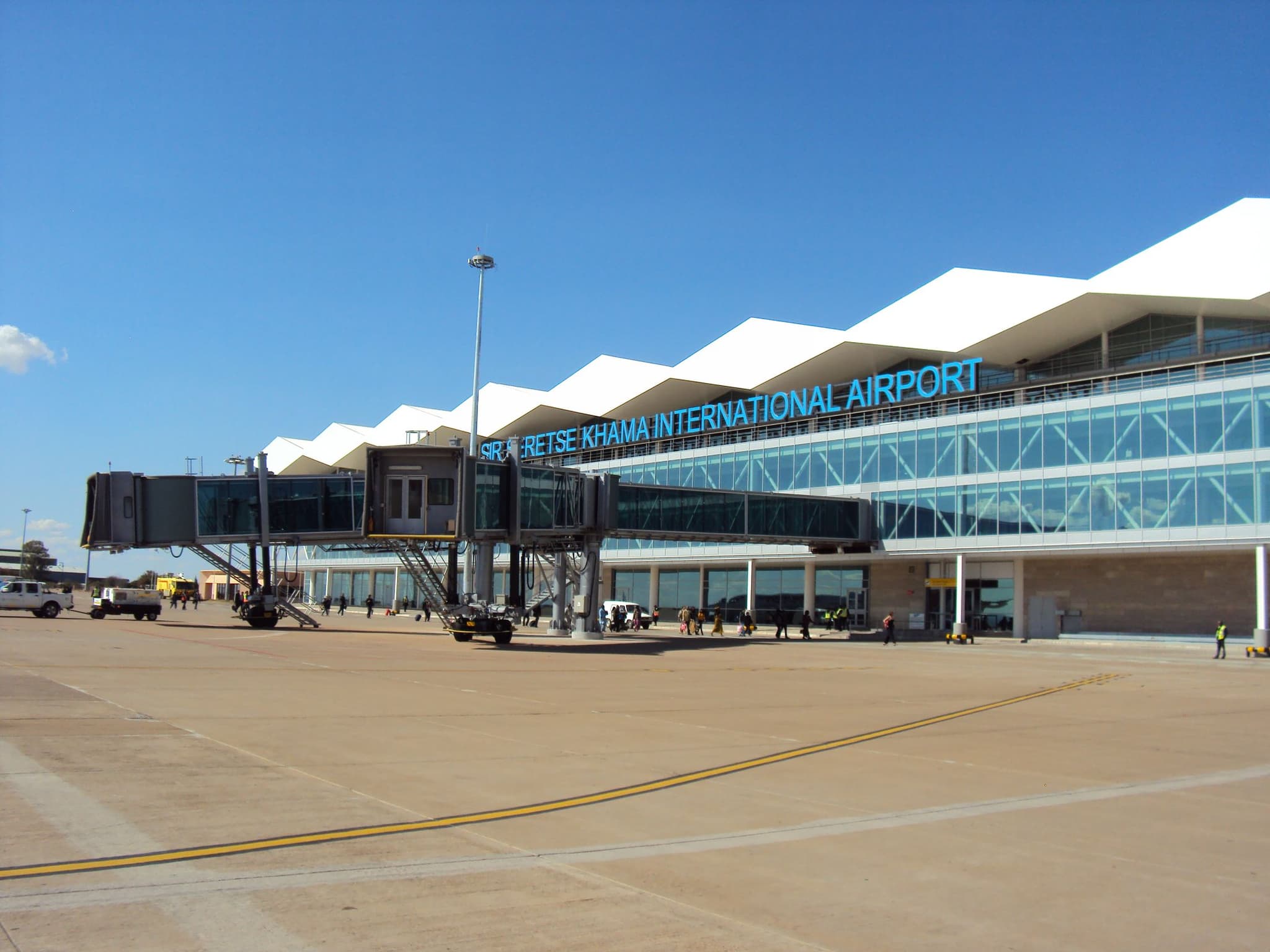
At the Runway, Built for the Region
TEMCO Specialised General Hospital is taking shape inside the Sir Seretse Khama International Airport Special Economic Zone, built for the whole of southern Africa as much as for Gaborone. Land here in 2029 and the specialist ward is a short drive from the terminal, with the complex care that once meant a flight to another continent waiting at the end of it. Opening 2029.
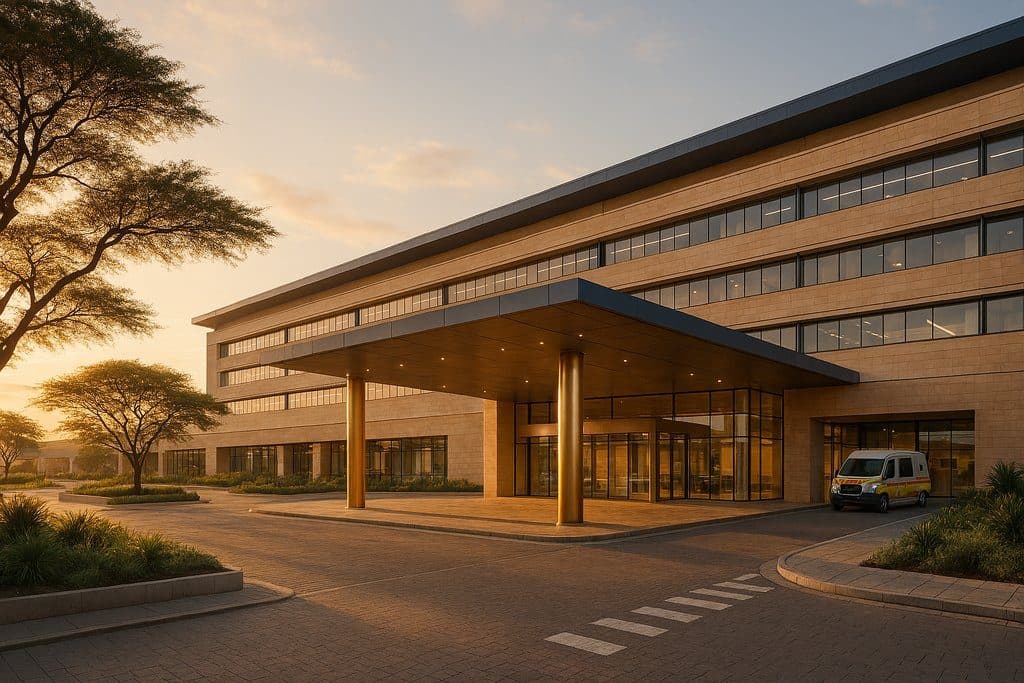 Indicative design concept
Sir Seretse Khama International Airport SEZ
TEMCO sits inside the Sir Seretse Khama International Airport Special Economic Zone in Gaborone, and the address is doing real work. A family weighing a complex operation thinks first about the standard of the care, then about what it costs and how far they must travel to reach it, and putting a specialist hospital at the runway turns that last question into a short drive. International arrivals, established transport links and the zone's customs and repatriation terms all pull in the same direction, so that a patient anywhere in the region can reach this standard of treatment in an afternoon.
The same address serves the greater Gaborone metropolitan area, so two streams meet at one entrance: patients flying in from across the region, and Batswana reaching specialist care close to home by public referral, on medical aid or privately. A woman arriving with a high-risk pregnancy and a family bringing a child who needs intensive care will come through the same Accident and Emergency doors as a patient who landed from Lusaka that morning, and the department is planned to serve the airport catchment and the surrounding communities together.
Site Specifications
130
Bed Capacity
Specialist beds
7–11 ha
Site Area
Hectares on site
SEZA
Zone Status
Qualifying development
2029
Operations
Target opening
On the Map at the Airport SEZ
The planned hospital site sits within the Sir Seretse Khama International Airport Special Economic Zone, on the southern edge of Gaborone — minutes from the international terminal.
Indicative site location within the SSKIA Special Economic Zone; the building footprint is still to be confirmed. Opening 2029.
DirectionsMap data © OpenStreetMap contributors.
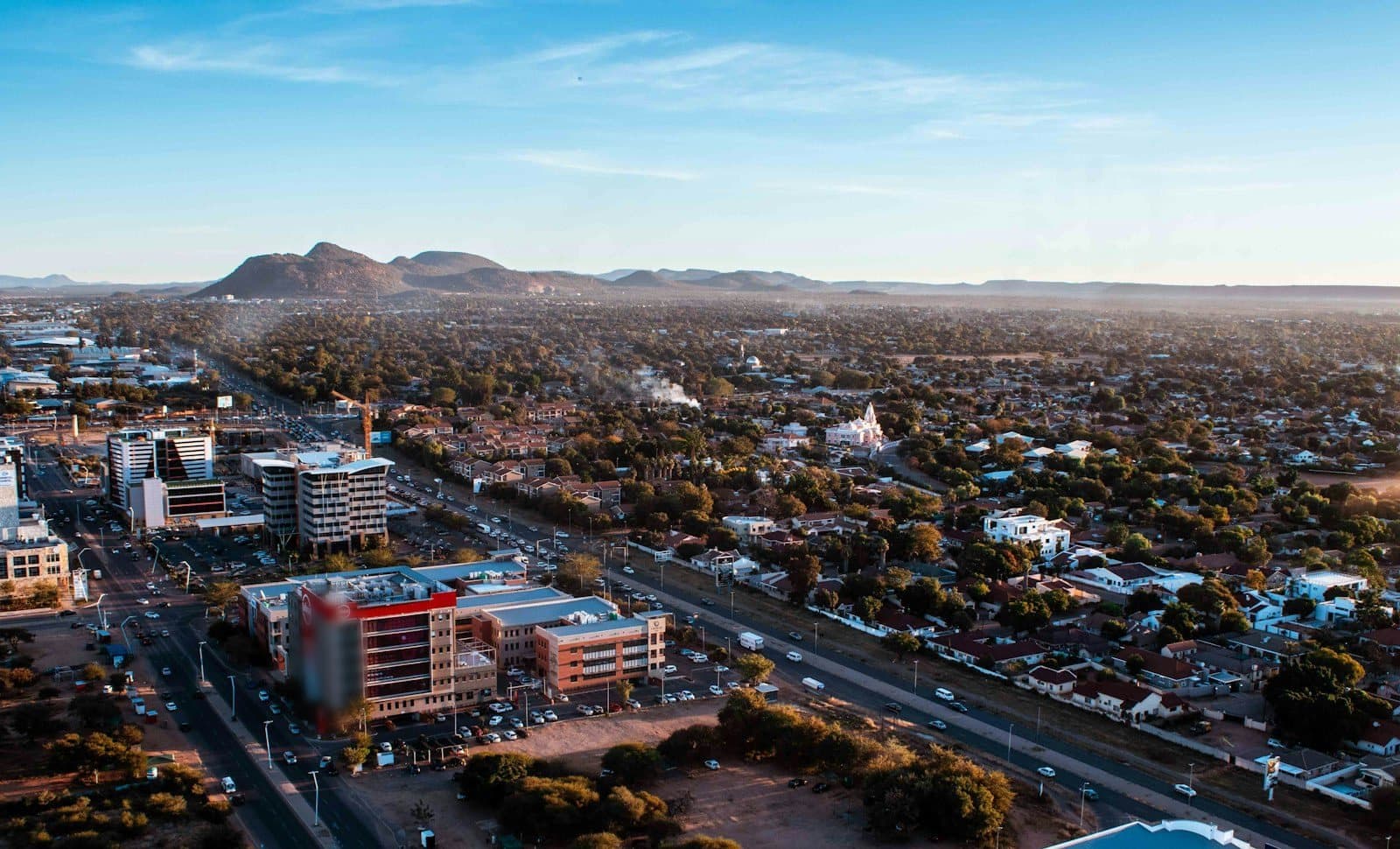
A 90-Minute Flight from Across the Region
Direct flights connect Gaborone to Johannesburg, Cape Town, Addis Ababa, Lusaka and Harare, which puts most of the region inside about ninety minutes of the site. By 2029 a patient in Lusaka or Harare who needs a structural-heart procedure can book that short flight instead of a twelve-hour trip to Bengaluru, and a relative can travel with them for a fraction of what the longer trip costs. The care waiting at the other end is planned to accredited-pathway standards at 25–35% below South African private rates, and each of those arrivals brings foreign exchange into Botswana, the same way a tourist or a tonne of ore does.
Three Advantages That Compound
TEMCO is a licensed company inside the airport Special Economic Zone, licensed by the Special Economic Zones Authority at board level in August 2026. It is an Entry Point Project of the Botswana Economic Transformation Programme and a priority project under National Development Plan 12, Botswana's plan for 2025 to 2030. Three advantages stack on top of one another, and because the zone licence carries no export condition, the hospital can treat Batswana and regional patients alike, earning the country foreign exchange while it serves the domestic demand it was built for.
100%
Profit repatriation, no exchange controls
Profits and capital leave Botswana in the currency they were earned in, without exchange-control restriction or approval queues.
Botswana holds no exchange controls at all, so nothing is trapped in-country.
0%
Customs duty on qualifying medical equipment
Imported medical equipment that qualifies under the zone enters at zero customs duty — linacs, imaging and theatre systems land without the import mark-up.
Every pula saved on duty is a pula that goes into the equipment ceiling instead.
SEZ
SEZA-serviced land
The site is delivered as serviced land inside the zone, with power, water and access provisioned as part of the SEZ framework, alongside simplified zone administration.
Infrastructure built into the zone, so capital concentrates on the hospital itself.
Together these terms pay for two things at once, a lower price at the bedside and a higher ceiling on what the hospital can do, which is why care of this standard can be offered in Gaborone at a price the region can actually meet.
Investor RelationsInside the Planned Precinct
The planned precinct and facility, designed around the way a patient actually moves through it, beginning at the arrivals hall and ending with going home, including the maternity unit, the neonatal unit for newborn babies and the children's units many of those families will be coming for. These are indicative architectural concepts illustrating what is being built at the SSKIA Special Economic Zone. No part of the hospital has been completed yet.
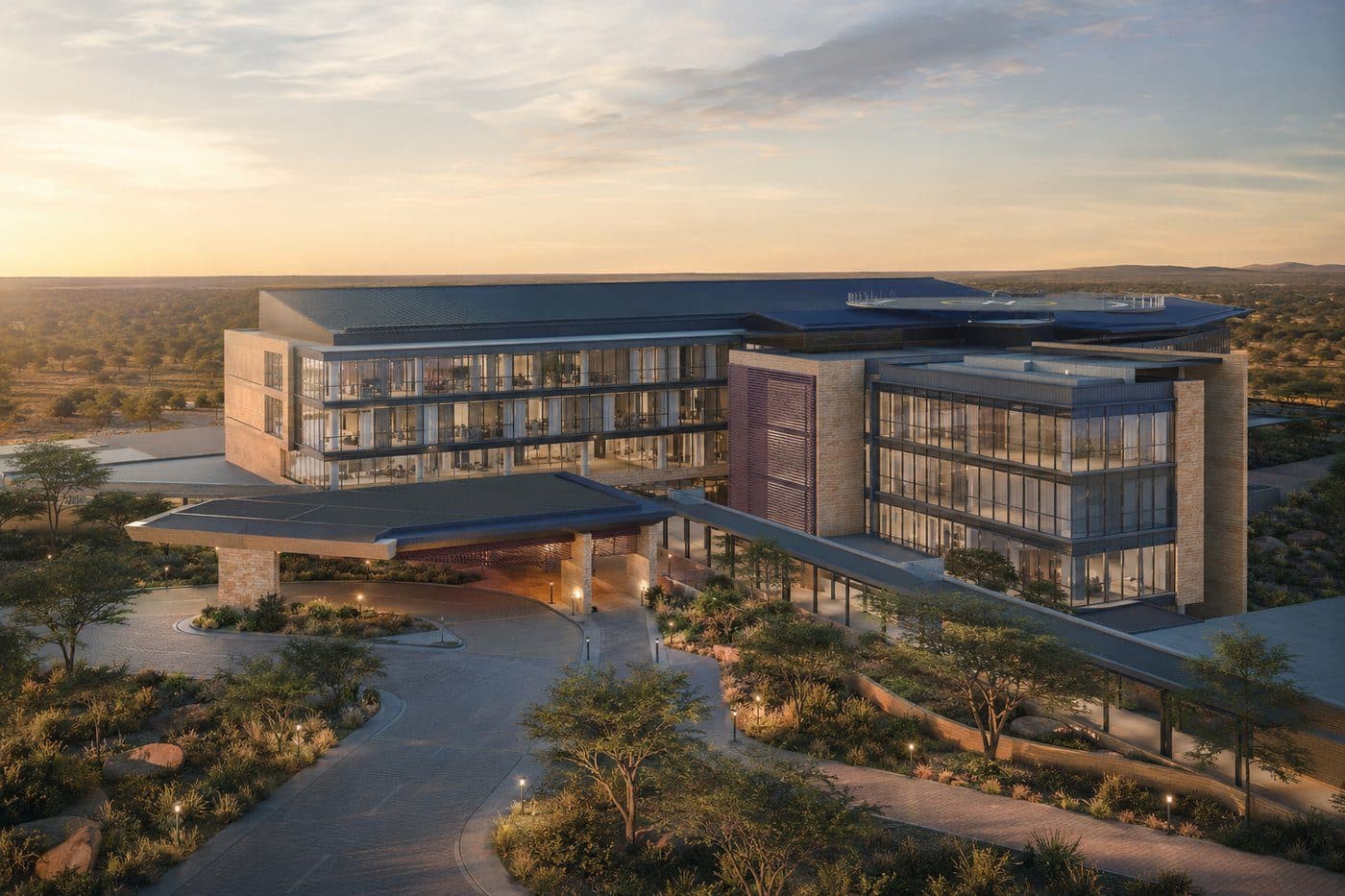
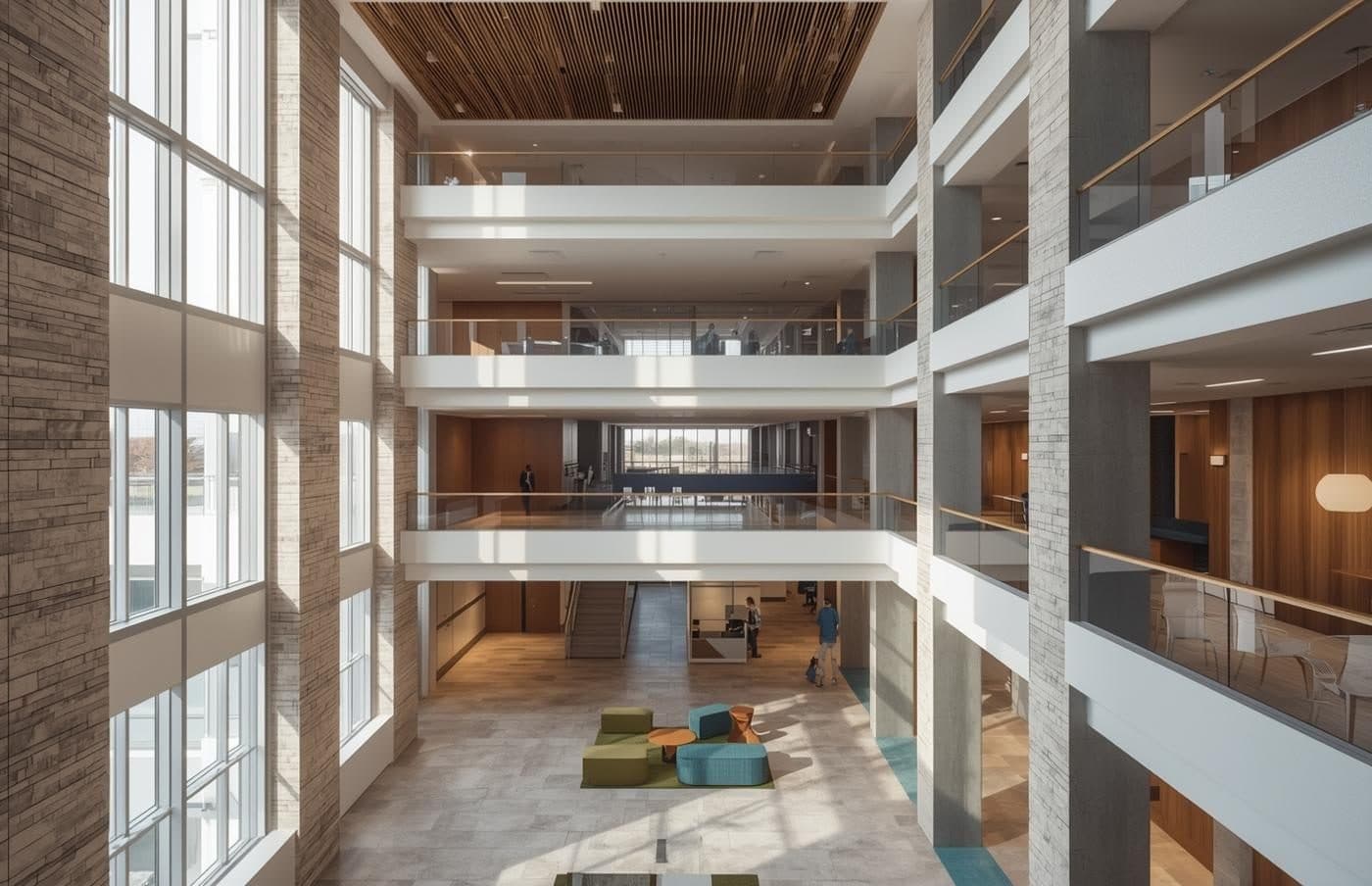
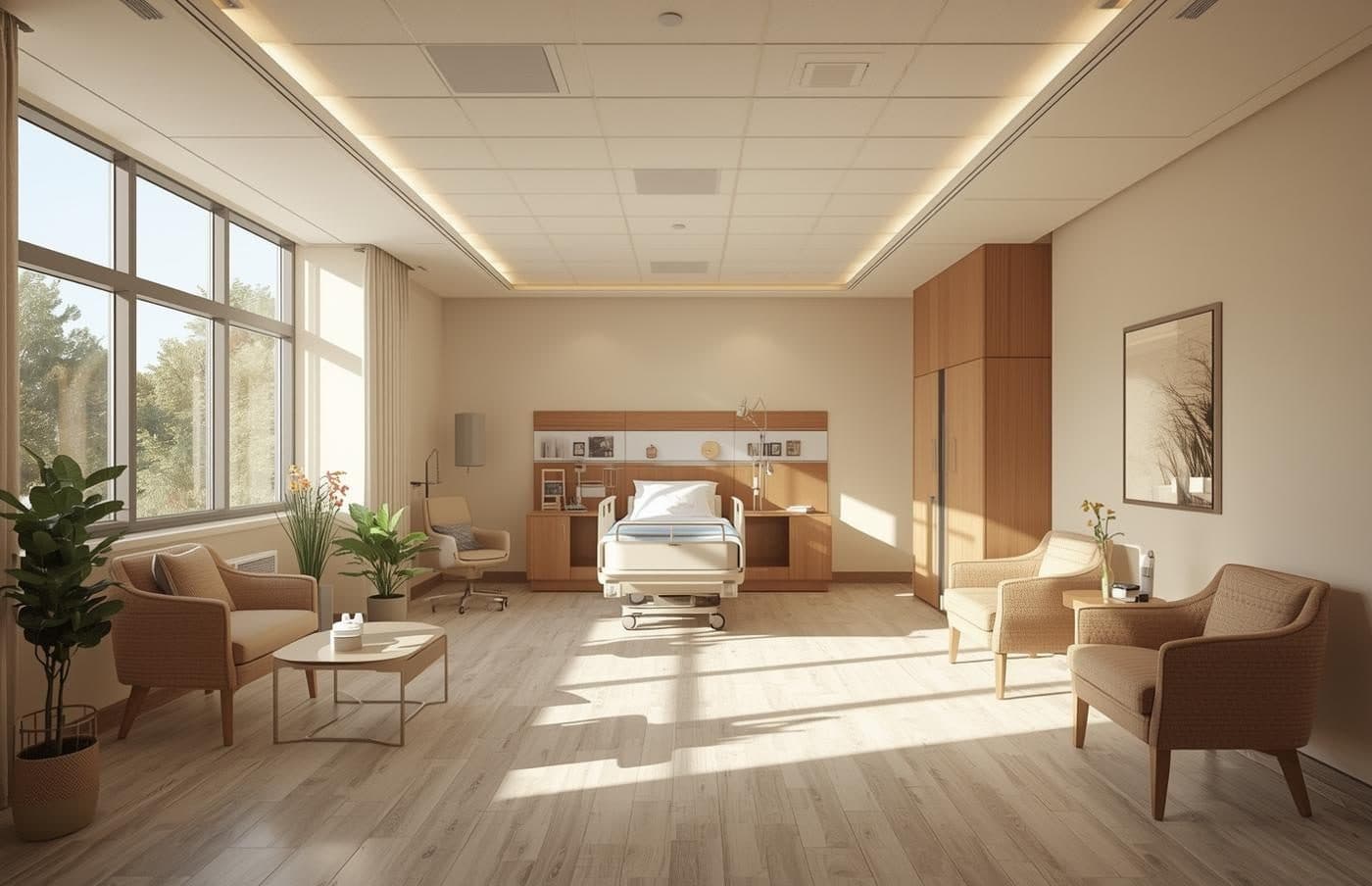
Indicative architectural design concept — TEMCO Specialised General Hospital, SSKIA SEZ. An illustrative concept of a facility yet to be built. Opening 2029.
Construction Timeline
Patients across southern Africa board flights today for specialist care, and Batswana do the same, so the money leaves the region with them. A phased delivery programme turns that flow into a building and then into a hospital that brings those patients here instead, and the first of them walk through the doors in Q2 2029.
Each bar is drawn across the quarters its phase occupies, so the width of a bar is the time it takes. Select a phase to read what happens in it.
Phase 01 of 05
2026PlannedCapital Raise and Design
Investor engagement, final architectural design, equipment specification and procurement planning.
Phase 02 of 05
Q4 2026PlannedConstruction Commences
Site preparation, foundation works and structural construction at the SSKIA SEZ precinct.
Phase 03 of 05
2027–2028PlannedBuild and Fit-Out
Structural completion, MEP installation, interior fit-out and the commissioning of medical equipment, including the maternity, neonatal and paediatric intensive care suites, for mothers, newborn babies and children.
Phase 04 of 05
Q1 2029PlannedCommissioning
Equipment testing, clinical-team onboarding, activation of clinical protocols and a readiness assessment along the JCI accreditation pathway — the groundwork that lets the doors open to a defined standard.
Phase 05 of 05
Q2 2029PlannedOperations Commence
Initial operations at 35% occupancy, ramping to full capacity over the first three years.
Delivery Model
The project team leads delivery itself and keeps a seat open for a strategic investor partner who wants a hand in how the hospital is built and run.
Engineering
In-House
Delivered in-house by the project team's own engineering and architecture team.
Procurement
Joint
The project team works jointly with approached contractors for materials and medical equipment sourcing within the SSKIA SEZ framework.
Management
Strategic Investor Opening
Project team-led, with an explicit opening for a strategic investor partner to bring hospital-sector operational experience alongside capital.
Invest in the Facility
A 130-bed specialist hospital at the Gaborone Airport SEZ, planned to treat patients from across southern Africa and to earn Botswana foreign exchange the way tourism and minerals already do, while serving the families on its doorstep. The capital structure is open to proposal.